Making Wisdom Your Most Important Goal

By Deepak Chopra, MD

It seems perverse that the easier life becomes, the worse our problems. Technology has created life-changing innovations like the Internet that are directly linked with terrorist attacks, giving like-minded fanatics instant global communication. Computers gave rise to social media, which has led to cruel bullying at school, fake news, conspiracy plots, and the anonymity to mount vicious personal attacks—all of these seem as endemic as hacking, another insoluble problem created by technology.

One could go on practically forever, and it wouldn’t be necessary to blame current technology either—the internal combustion engine is directly connected to climate change, and nuclear fission led to the horrors of atomic warfare. But my point isn’t to bash technology; we owe every advance in the modern world to it—except one.

Technology is based on higher education, and whatever its benefits, higher education has almost totally lost interest in wisdom. Wisdom isn’t the same as knowledge. You can collect facts that lead to the understanding of things, but wisdom is different. I’d define it as a shift in allegiance, away from objective knowledge toward self-awareness.

The Greek dictum “Know thyself” doesn’t make sense if the self you mean is the ego-personality, with its selfish demands, unending desires, and lack of happiness. Another self is meant, which isn’t a person’s ego but a state of consciousness. “Self” might not even be a helpful term, despite the age-old references to a higher self identified with enlightenment. It is more helpful to say that the pursuit of wisdom is about waking up.

Waking up is a metaphor for the conscious life, and the conscious life is what wisdom leads to. Every day we are driven by unconscious impulses and desires, and unexamined processes go on beneath the surface of the mind that lead to anxiety, depression, low self-esteem, self-destructive behavior, and every kind of pointless discord, from household tensions to war. The outbreak of World War I led to senseless slaughter, as did the excesses of Communism. These consequences were unforeseen, yet in retrospect it is obvious that World War I was a kind of eruption from the unconscious, of pride, anger, stubborn nationalism, and xenophobic tendencies that people were harboring as a matter of course.

European anti-Semitism wasn’t invented in Germany by a single fanatical Nazi; it was accepted in the most polite and civilized circles almost everywhere. In one way or another, allowing our unconscious to go unexamined has caused the greatest and longest suffering in human history. It was suffering and finding a way to end it that became the foundation of Buddhism, but any spiritual teaching that will show people how to wake up also aims to bring them out of suffering.

In that sense, wisdom has a definite purpose, but escaping the ills and woes of the unconscious life is secondary to the main purpose of waking up, which is to know who we really are. The answer can be formulated in a few words: humans are a species of consciousness whose special trait is self-awareness. Being self-aware, we have the capacity to access the very source of awareness.

At first sight this ability doesn’t necessarily sound positive. The vast majority of people have become expert at denial and were taught from childhood not to dwell on themselves, an activity deemed self-centered if not totally solipsistic. People are also expert at keeping secrets from themselves, at going along to get along, at valuing social conformity and fitting in. These habits unravel when self-awareness awakens. Not everyone wants to let them go, for obvious reasons.

But the worst aspect of being unconscious, or asleep to use the metaphor of waking up, is self-limitation. We all go around with core beliefs about how insignificant a single individual is, how risky it would be to step out of the norm, and how only the gifted few rise above the average. The wise in every generation have asserted the opposite, that the source of consciousness makes human potential infinite. We can think an infinite number of new thoughts and say things never before said. In fact, there is no arbitrary limit on any trait that makes us human: intelligence, creativity, insight, love, discovery, curiosity, invention, and spiritual experiences of every kind.

We are a species of consciousness whose great pitfall isn’t evil but “mind-forg’d manacles,” to borrow a phrase from the poet William Blake. We make up mental constructs, invent stories around them, and tell the next generation that these stories are true. One story says that women are inferior, a complex tale that gave rise to a thousand injustices and false beliefs. Us-versus-them thinking leads to stories about racism and nationalism that caused their own barbarous results.

Waking up allows us to escape all stories and to live free of self-limiting mental constructs. The real question is whether it can be done. Can you and I wake up? If so, how do we go about it? Are there awakened teachers who can provide examples of what it means to live the conscious life? This is exactly where wisdom enters the picture. Without living examples of awakened individuals, the whole enterprise would be trapped in a limbo of fantasy and wishful thinking. But when a society values wisdom, it turns out that the awakened exist among us and always have.

Anyone who wants to wake up is fortunate to be alive now, because despite our global problems, irrational behavior, and self-destructive denial, modern society is open to ready communication about every topic, including the exploration of higher consciousness. Where prior generations had little grasp of higher consciousness beyond the precepts of religion, millions of people today can walk their own path to self-awareness, choosing to include God, the soul, organized religion, and scriptures as they see fit, or to avoid them. Even “spirituality” is a term you can adopt or ignore—the real purpose of waking up is about consciousness.

We have always had the potential to be wise by using self-awareness to explore who we really are. A society driven by consumerism, celebrity worship, video games and social media gossip, and indifference to massive social problems feels like it could never find wisdom, or even the first impulse to wake up. But I’d argue that we are the most fortunate society to wake up in, simply because higher consciousness is open to anyone. I count this as the greatest opportunity facing us, to see that waking up is possible and to hasten toward it as quickly as we can.

Deepak Chopra MD, FACP, founder of The Chopra Foundation and co-founder of The Chopra Center for Wellbeing, is a world-renowned pioneer in integrative medicine and personal transformation, and is Board Certified in Internal Medicine, Endocrinology and Metabolism.  He is a Fellow of the American College of Physicians and a member of the American Association of Clinical Endocrinologists. Chopra is the author of more than 85 books translated into over 43 languages, including numerous New York Times bestsellers. His latest books are The Healing Self co-authored with Rudy Tanzi, Ph.D. and Quantum Healing (Revised and Updated): Exploring the Frontiers of Mind/Body Medicine. Chopra hosts a new podcast Infinite Potential available on iTunes or Spotify  www.deepakchopra.com

Read More

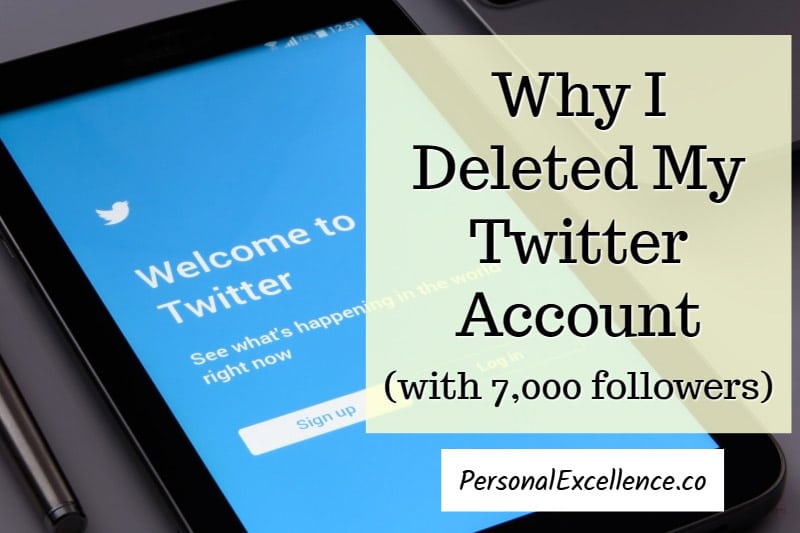
Why I Deleted My Twitter Account with 7,000 Followers

Why I Deleted My Twitter Account (with 7,000 followers)

Hi everyone! About two months ago (April 2018), I deleted my Twitter account @celestinechua. I thought I should write a post explaining this as some of you have been asking me about it.

My Issues with Social Media

First off you guys know my stance with regards to social media. While social media used to be a great place for authentic conversations, it has become a very “noisy” commercial ground now. When I use social media as a content publisher, I feel like I’m just one drop in a very large ocean, where my comments have no impact whatsoever. There are just way too many — think hundreds of millions of — content creators on social media these days, with many using bots, digital assistants, and agencies to tweak every aspect of their social media messaging, so that they can get the best engagement and ROI for their posts.

This is vastly different than years ago, say in 2011, when I was having many authentic interactions with readers on Facebook and social media has not become the monster that it is now.

These days though, my notifications on Facebook and Twitter are either spam, some commercialized plug, or some pointless alert. It has become very tiring to log into my social media accounts each day with a bright red alert showing XX notifications, only to sieve through and see that they are pointless updates. I have talked about these issues in these posts: Why I Deleted My Facebook Page, Challenges that I’m Facing Today, and The Fear of Missing Out (I’ve since reinstated my Facebook page after deleting it in 2016, but I no longer actively maintain it).

Detroit Become Human: Hands in the Junkyard Scene

This is how I feel when I log onto social media and my inbox every day for the past few years (Image: Detroit Become Human; theRadBrad)

My Issues with Twitter

In the same vein, Twitter has become a frustrating experience for me in the past few years.

To begin with, most readers of PE do not follow me there. Many readers on PE don’t use Twitter, while those who do don’t connect with me using that channel. I think Twitter has a specific demographic and most PE readers are just not active Twitter users. Users who want to get my updates sign up for my mailing list (which is the official channel to get my updates btw — I post stuff that I don’t post here, including new courses and special messages). For anyone wants to send me a message, the contact form is the way to go.

Next, when I looked at my Twitter followers — about 7,000 of them — I realized that (a) this number has not been growing for the past two years, and (b) 99.9% of them are inactive or “dead.” “Dead” in that the users no longer use their accounts, or are following so many people that users like me who believe in tweeting less, not more, can no longer be heard anymore. Out of these 7,000, maybe only three people actively read and reply to my tweets (hi Charles, Ted, and Rick!). It became clear that my Twitter follower count has become a vacant number. While I was meticulously maintaining my Twitter account daily for the past few years and thinking that I was reaching 7,000 followers with every tweet, I was really shouting into a black hole.

Following this, I then looked at my Twitter messages. Over the years, I began to receive a high proportion of empty alerts, such as notifications of some company bot tweeting out my articles and tagging me, usually done to increase exposure of their account/business. Messages from content creators trying to network, expressing manufactured interest in what I wrote — but the reality is they are just trying to network to spread the word about their service. Nothing wrong with what they are doing, but when I check Twitter, I’m looking for authentic conversations with people who really read PE, not networking requests and solicitation. These are things that I’ve dealt with immensely for the past ten years, and I feel like I’m at a stage of my life (mid-30s) where I just want to move on and focus on creating content and live my life, not battle the same things that I spent my 20s dealing with.

Note that this issue is specific to me rather than most Twitter users. Running a large website has made me the target of an enormous amount of spam and solicitation requests. When I looked at my issues with Facebook, blog comments, contact form, and now Twitter, it’s the same thing — an enormous amount of spam, noise, and empty comments because of my blog’s visibility. While I used to get a ratio of 100% authentic messages to 0% noise in my messages, now it’s more like 0.01% authentic messages to 99.9% noise.

Frustration vs. Inspiration

After thinking about this, I realized the fundamental problem is that the social media and internet landscape has changed enormously since I started my website. Conversations online used to be authentic because people were using the internet in an authentic way then. These days, the internet has become massively commercialized, while abusers have a huge amount of power due to the democratization of technology and automation tools.

The answer, then, is to use social media in a way that enables me. I asked myself: If this platform is making me feel so frustrated when using it, should I continue using it then? The answer was clearly, a “no.”

To be honest, I felt a little surprised by my answer. Because having a Twitter account feels so basic, so essential today, something that every business owner must have. Every time you sign up for a new service, you will invariably be asked for your Twitter handle (and Facebook page ID). Not having a Twitter account is unheard of. It feels blasphemous. It feels like you are some backward, outdated business owner who is not in touch with his/her audience.

But is it true though? Because even when I was managing a Twitter account with “7,000 followers,” I didn’t feel like I was reaching anyone. Every time I tweeted something, I felt like I was throwing a coin into an abyss. I didn’t feel this way in the early years of Twitter — it’s only so in the recent years as social media morphed into some giant, monster entity. These days, I feel like everyone is shouting at the top of their lungs and commercial businesses have unlimited resources to micro-optimize every aspect of their presence, and social media is no longer the right place for me to connect with my audience: everyday people without a voice, people whom I want to speak out to and help.

In short, Facebook and Twitter were good ways for me to connect with my audience from the late 2000s to early 2010s, but not anymore as they have morphed into totally different beasts that favor quick engagement and short-form conversation. I have become tired of navigating these platforms’ ever-changing layouts and guidelines for outreach (particularly for businesses), and spending an exceeding amount of energy to maintain my accounts with very little return. The net conclusion of having a business account with these giants these days is that there are too many creators (many profit-focused over value-driven) with elaborate teams and assistants hacking the algorithms and getting their content seen by focusing on what the social media giants want (rather than what truly helps the user).

What I’m interested in is creating long-form, deep content on important life topics, and these are just not well-suited for their algorithms and landscape today.

“Death by a Thousand Cuts”

In retrospect, I should have closed my Twitter account much earlier. I feel like this is a case of “death by a thousand cuts,” something which I feel is very common in today’s social media world. When something is unpleasant, if the unpleasantness is on a very small level, you will usually tolerate it. What social media giants have done today is that they are delivering many little cuts slowly, over a long period of time. Tweaking the platform little by little, changing the rules every other day, altering the algorithm in a way that builds stickiness for them (but creates user fatigue), inserting little ads everywhere, and just making changes that maximize profit rather than create value.

Since these cuts are delivered little by little, most people don’t observe this. They continue to use the platform every day, addicted to it (an addiction that is carefully engineered by growth hacker teams). At the same time, the users start to experience other changes in their life: decreased productivity, mental fatigue, a general feeling of emptiness, but they have no idea that these are linked to their use of such platforms. So they stay on, getting sucked deeper and deeper.

I find this issue with Netflix as well (even though they have an active product which is video subscriptions) — I tried using it for the past month as part of a free trial from another service, and I find that it employs highly negative, dark design patterns meant to suck the user deeply into the platform. Not surprising since this is what many modern-day giants are doing.

When it comes to digital platforms today, figure out your needs and use them in a way that supports your needs, rather than the other way round where you change your life to fit their ever-changing rules and guidelines. I share more in 6 Tips to Deal with Digital Burnout.

Endnote

At the end of the day, I’ve spent the past few years trying to make sense of my relationship with social media and online tools. I don’t want to jinx this but I think I’m starting to reach a good place regarding this.

I have my Facebook page but I don’t actively maintain it anymore because of the reasons stated here. I no longer have Twitter and I’m happy to have gotten rid of it. As a Facebook personal account user, I use it in a way that supports my needs. I have my growing newsletter list where I can connect authentically with you guys, where I get authentic replies to what I send out (thank you to all of you who have been participating in my surveys and sending kind messages through the contact form!). There are still negative bad eggs every here and there, but I’ve come up with tools and ways to manage and minimize them to a near-zero instance.

In the meantime, I’ve been busy working on my next course (on how to discover your life purpose), based on your feedback to my email survey sent out a few months ago. I’ll be sharing updates via my email list when it’s ready, so stay tuned!

Check out:

The post Why I Deleted My Twitter Account with 7,000 Followers appeared first on Personal Excellence.

Read More

How I Handled a Toxic Boss (It Might Not Be What You’re Expecting)

You’re reading How I Handled a Toxic Boss (It Might Not Be What You’re Expecting), originally posted on Pick the Brain | Motivation and Self Improvement. If you’re enjoying this, please visit our site for more inspirational articles.

Ah, the thrill of securing a new job. It’s exciting! There’s so much hope that goes into looking for a new role and the sense of professional validation that comes from making it through the application and interview process can be a little intoxicating. They’ve met you and they want you. Yay!

But what do you do when a few weeks into your highly anticipated new position you realise it isn’t the shiny opportunity you had hoped for? What if it turns out the culture is hostile and there’s one very obvious culprit.

The Toxic Boss

This was a very real scenario I found myself in a few years back. I’d been working hard trying to climb that progression ladder in my old role but kept getting knocked back, without any proactive feedback to help me improve for next time. So I began to look elsewhere. Within a few months, an opportunity landed in my lap that sounded perfect. A global organisation, great salary and perks, and the step up in job title I had been coveting. I applied, was interviewed and offered the job.

As the first day at my new job approached I eagerly awaited the sound of my alarm on Monday morning. During my first week, I noticed the rest of the team were subdued but assumed it was because my role was new and they weren’t used to reporting someone. At the end of the week, I took them all out for a drink after work to get to know them a bit better. I was surprised when they began to tell me they were relieved I was there and confused by their cryptic assertions they hoped ‘things would get better now’.

The following week everything began to get clearer. My boss, the one who had been overseeing the team, and who interviewed me for the role began to reveal another side that completely blindsided me.

The Signs of a Toxic Boss

In research conducted by Gallup, 60% of people advised that their boss makes them miserable at work. It’s not uncommon to come up against personalities we clash with in the workplace. Navigating these clashes is a sign of good emotional intelligence, and definitely, something to work on as an area to cultivate peace at work.

However, there is a big difference between a personality clash and someone who is toxic. Especially when this person is in a position of power. Some of the signs of a toxic boss include:

  • Micromanaging 
  • Lack of compassion or social skills  
  • No interest in staff wellbeing or development 
  • Takes personal credit for all the teams good work  
  • Blames their mistakes or errors on the team 
  • Belittles, ridicules or acts abusively towards you or a colleague 
  • Dismissive of ideas or team input 
  • Gossiping, bitching and backstabbing in the office

When it came to my experience, my boss displayed all of these behaviours. One day they would be charming, kind and interested in my work and personal life. The next day they were abusive, volatile and all too happy to tell me how incompetent I was. They were also smart. They left no paper trail of the way they treated staff. All emails and voicemails reflected the charming persona they worked hard to present to clients and other senior management.

What to do when dealing with a toxic boss

Toxic bosses tend to fall into one of three camps: narcissistic, dictator or inadequate. Knowing how to handle a toxic boss depends which one of these camps they fall into. Inadequate bosses may be the easier of the three to handle and find ways of getting along with because their reasoning for being toxic is evident – they’re usually fearful you could do a better job than them.

It’s much harder to overcome the challenges of a toxic boss when they fall into the narcissistic or dictator camps because these are usually ingrained behaviours that stem from their own experiences and perceptions of the world. These behaviours can be very difficult to change.

There’s a wealth of articles out there providing proactive advice on how to deal with a toxic boss. Many of these provide practical tips like setting verbal boundaries and how to report the behaviour to HR.

What did I do? I resigned.

Two months into my new role I knew I had to make a decision. The emotional toll of dealing with this person was bleeding into all areas of my life and I knew I didn’t want to spend another lunch break hiding in the ladies toilets, crying over my sandwiches.

While that might sound a bit defeatist but my number one priority was my emotional safety. One friend told me I should have stuck it out, made formal complaints, protected the rest of the team. The members on my team had been working in their roles ranging from one to eight (!) years working under the toxic boss. I decided their capacity to cope or put up with this individual didn’t need to be mine. I discussed my resignation with the rest of the team before having a meeting with a member of HR, where I made it clear why I was leaving. This included requesting to work my notice from home, with no further contact with the boss, which they agreed to.

It took me a month to find another job but the relief of being out from under my toxic boss vastly outweighed the stress of job hunting. My next job reaffirmed I’d made the right decision, with an incredibly supportive Manager and Director who really helped me to progress and develop as a professional.

There’s the saying “you don’t live to work, you work to live”. One of the biggest career lessons I’ve learnt is that work doesn’t have to be painful. Putting my emotional health first led me to better things. Above everything else, if you’re in a similar situation, that might be worth considering.


You’ve read How I Handled a Toxic Boss (It Might Not Be What You’re Expecting), originally posted on Pick the Brain | Motivation and Self Improvement. If you’ve enjoyed this, please visit our site for more inspirational articles.

Read More

Selfhelp Advice On The Way To Conquer Low Self Worth

No-one can experience substandard with out your approval Do you suffer from minimal confidence or inferiority sophisticated? I have to reveal some personal growth tips about the way to conquer that product create your self-assurance. You might have inferiority sophisticated mainly because the individual thinks that you have a have to make an impression people,…

Read More