The Truth Driving Stalling And Inspiration

Some people experience postponement. It helps to keep them from residing achieved lives and getting to their entire probable. There are lots of practices powering why is individuals waste time and approaches to cease, but number of strike the claw around the mind and expose the purpose, and that is: Find Your Enthusiasm When you…

Read More

GE 295: How Founder Mike Roberts Started With Only $3K But Grew SpyFu To $7M ARR and 11K Customers (podcast)

Mike Roberts SpyFu Nacho Analytics

Hey everyone! In today’s episode, I share the mic with Mike Roberts, the founder of SpyFu and Nacho Analytics, software that is called the “Holy Grail of Competitive Intelligence”.
Tune in to hear how Mike built SpyFu with only $3,000, why historical data matters when it comes to digital marketing and how the company was able to make over $7 million in annual revenue.

Time-Stamped Show Notes:

  • [00:42] Before we jump into today’s interview, please rate, review, and subscribe to the Growth Everywhere Podcast!
  • [01:58] Mike founded SpyFu about 12 years ago in Scottsdale, Arizona.
  • [02:25] His office is nearby, so he commutes on his electric skateboard.
  • [02:55] His favorite metric is earning per employee.
  • [03:05] They make over $7 million in revenue annually.
  • [03:45] Mike started SpyFu with only $3,000 left in his bank account.
  • [04:01] Everything mattered and every mistake was personal, in his experience.
  • [04:23] Entrepreneurship is a journey and you’re constantly learning.
  • [05:25] SpyFu is $39/month for unlimited use.
  • [05:55] It allows you to fully research your competitors.
  • [06:39] SpyFu generally has more historical data, whereas SEMRush will give you 18 months of data.
  • [07:00] History matters: people make mistakes early on and it’s important to see everything that they have done and if they worked.
  • [07:41] With SpyFu, there are no limits, unlike every other one of their competitors.
  • [09:00] He doesn’t want to cut his prices, but acknowledges that you can make more money per customer if you have more customers.
  • [10:46] SpyFu has around 11,000 paying customers.
  • [10:56] A lot of their customers use the free option.
  • [12:07] Their launch brought in $20,000 MRR.
  • [13:18] Nacho is the “Holy Grail of competitive intelligence”.
  • [14:40] The entire internet is built on anonymous user tracking.
  • [15:05] So, Mike’s team wondered what would happen if they collected data, but didn’t use that to display ads.
  • [15:21] They take all the data and push that into Google Analytics.
  • [15:37] Then you can look at that info as if it were your own.
  • [15:57] They are not sponsored by Google, but are legitimate.
  • [17:12] This sort of data has always existed, but it’s only been accessible to billion dollar companies.
  • [17:30] $99 gets you information on 5 websites.
  • [19:51] If Mike had gotten capital for SpyFu, they wouldn’t have $7 million in revenue, they would have made $40 million. However, their attention would be diluted and he wouldn’t have been able to launch Nacho.
  • [20:20] Raising capital sometimes costs control of the company.
  • [21:10] VC money can get in the way when you have a failed entity, but you won’t quit because of pride and debt.
  • [22:00] Mike has more failures than he can count and actually has a podcast where he talks about them.
  • [22:50] SpyFu has a lot of servers and environments.
  • [23:30] He set things up so that certain environments don’t get scanned and indexed by Google.
  • [24:15] There was a time that they meant for the site to get indexed, but it accidentally did not.
  • [24:38] Robotto is a great resource for monitoring text robots.
  • [25:37] Mike has 10 electric skateboards and hover board-type items.
  • [26:00] He is looking forward to getting an electric bicycle.
  • [27:20] Mike’s favorite tool is VWO, as it has helped him make millions.
  • [30:25] Mike originally thought he had to set aside a certain percent of his revenue.
  • [30:55] He later realized that there are better ways to do revenue sharing.
  • [32:12] One book Mike recommends is How to Win Friends and Influence People.

Resources from the interview:

Leave Some Feedback:

  • What should I talk about next? Who should I interview? Please let me know on Twitter or in the comments below.
  • Did you enjoy this episode? If so, leave a short review here
  • Subscribe to Growth Everywhere on iTunes
  • Get the non-iTunes RSS Feed

Connect With Eric Siu:

The post GE 295: How Founder Mike Roberts Started With Only $3K But Grew SpyFu To $7M ARR and 11K Customers (podcast) appeared first on Business & Personal Growth Tips.

Read More

How I Handled a Toxic Boss (It Might Not Be What You’re Expecting)

You’re reading How I Handled a Toxic Boss (It Might Not Be What You’re Expecting), originally posted on Pick the Brain | Motivation and Self Improvement. If you’re enjoying this, please visit our site for more inspirational articles.

Ah, the thrill of securing a new job. It’s exciting! There’s so much hope that goes into looking for a new role and the sense of professional validation that comes from making it through the application and interview process can be a little intoxicating. They’ve met you and they want you. Yay!

But what do you do when a few weeks into your highly anticipated new position you realise it isn’t the shiny opportunity you had hoped for? What if it turns out the culture is hostile and there’s one very obvious culprit.

The Toxic Boss

This was a very real scenario I found myself in a few years back. I’d been working hard trying to climb that progression ladder in my old role but kept getting knocked back, without any proactive feedback to help me improve for next time. So I began to look elsewhere. Within a few months, an opportunity landed in my lap that sounded perfect. A global organisation, great salary and perks, and the step up in job title I had been coveting. I applied, was interviewed and offered the job.

As the first day at my new job approached I eagerly awaited the sound of my alarm on Monday morning. During my first week, I noticed the rest of the team were subdued but assumed it was because my role was new and they weren’t used to reporting someone. At the end of the week, I took them all out for a drink after work to get to know them a bit better. I was surprised when they began to tell me they were relieved I was there and confused by their cryptic assertions they hoped ‘things would get better now’.

The following week everything began to get clearer. My boss, the one who had been overseeing the team, and who interviewed me for the role began to reveal another side that completely blindsided me.

The Signs of a Toxic Boss

In research conducted by Gallup, 60% of people advised that their boss makes them miserable at work. It’s not uncommon to come up against personalities we clash with in the workplace. Navigating these clashes is a sign of good emotional intelligence, and definitely, something to work on as an area to cultivate peace at work.

However, there is a big difference between a personality clash and someone who is toxic. Especially when this person is in a position of power. Some of the signs of a toxic boss include:

  • Micromanaging 
  • Lack of compassion or social skills  
  • No interest in staff wellbeing or development 
  • Takes personal credit for all the teams good work  
  • Blames their mistakes or errors on the team 
  • Belittles, ridicules or acts abusively towards you or a colleague 
  • Dismissive of ideas or team input 
  • Gossiping, bitching and backstabbing in the office

When it came to my experience, my boss displayed all of these behaviours. One day they would be charming, kind and interested in my work and personal life. The next day they were abusive, volatile and all too happy to tell me how incompetent I was. They were also smart. They left no paper trail of the way they treated staff. All emails and voicemails reflected the charming persona they worked hard to present to clients and other senior management.

What to do when dealing with a toxic boss

Toxic bosses tend to fall into one of three camps: narcissistic, dictator or inadequate. Knowing how to handle a toxic boss depends which one of these camps they fall into. Inadequate bosses may be the easier of the three to handle and find ways of getting along with because their reasoning for being toxic is evident – they’re usually fearful you could do a better job than them.

It’s much harder to overcome the challenges of a toxic boss when they fall into the narcissistic or dictator camps because these are usually ingrained behaviours that stem from their own experiences and perceptions of the world. These behaviours can be very difficult to change.

There’s a wealth of articles out there providing proactive advice on how to deal with a toxic boss. Many of these provide practical tips like setting verbal boundaries and how to report the behaviour to HR.

What did I do? I resigned.

Two months into my new role I knew I had to make a decision. The emotional toll of dealing with this person was bleeding into all areas of my life and I knew I didn’t want to spend another lunch break hiding in the ladies toilets, crying over my sandwiches.

While that might sound a bit defeatist but my number one priority was my emotional safety. One friend told me I should have stuck it out, made formal complaints, protected the rest of the team. The members on my team had been working in their roles ranging from one to eight (!) years working under the toxic boss. I decided their capacity to cope or put up with this individual didn’t need to be mine. I discussed my resignation with the rest of the team before having a meeting with a member of HR, where I made it clear why I was leaving. This included requesting to work my notice from home, with no further contact with the boss, which they agreed to.

It took me a month to find another job but the relief of being out from under my toxic boss vastly outweighed the stress of job hunting. My next job reaffirmed I’d made the right decision, with an incredibly supportive Manager and Director who really helped me to progress and develop as a professional.

There’s the saying “you don’t live to work, you work to live”. One of the biggest career lessons I’ve learnt is that work doesn’t have to be painful. Putting my emotional health first led me to better things. Above everything else, if you’re in a similar situation, that might be worth considering.


You’ve read How I Handled a Toxic Boss (It Might Not Be What You’re Expecting), originally posted on Pick the Brain | Motivation and Self Improvement. If you’ve enjoyed this, please visit our site for more inspirational articles.


Read More

Selfhelp Advice On The Way To Conquer Low Self Worth

No-one can experience substandard with out your approval Do you suffer from minimal confidence or inferiority sophisticated? I have to reveal some personal growth tips about the way to conquer that product create your self-assurance. You might have inferiority sophisticated mainly because the individual thinks that you have a have to make an impression people,…

Read More

The Shiny Object Syndrome: How to Stay Focused and Stop Getting Distracted

The Shiny Object Syndrome: Stay Focused and Stop Getting Distracted

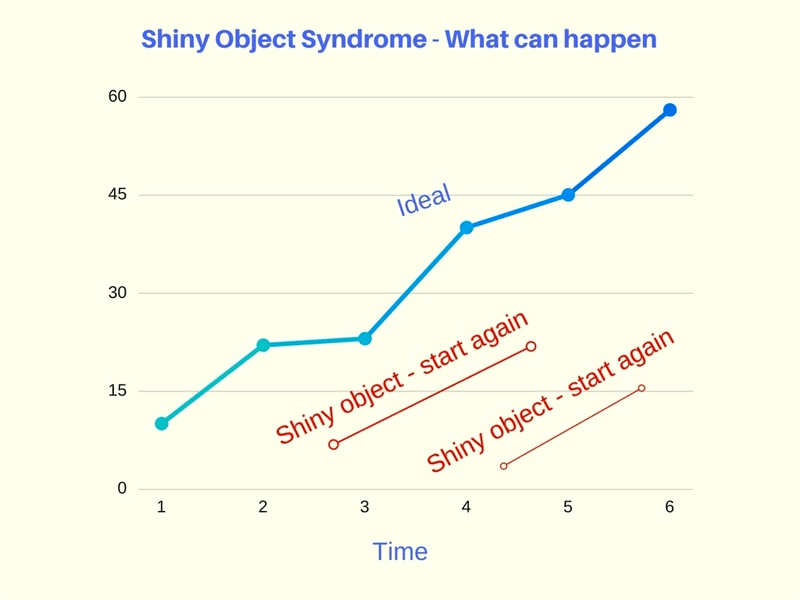
Have you heard of the Shiny Object Syndrome? It is the tendency for someone to chase something new — be it a new business idea, tool, or goal — rather than stay focused on what they’re doing.

It is similar to a child who is attracted to anything that’s shiny and new. I have a nephew who is 18 months old, and he is constantly attracted to anything that moves or emits sound. As a child approaches a new object that he’s never seen, he’s intrigued at first, but quickly loses interest as the item loses its appeal. He’s then attracted to the next new shiny thing, only to lose interest and seek the next new shiny object!

You know that you have experienced the shiny object syndrome if you belong to the following:

  • You have a list of business ideas but nothing gets executed.
  • You constantly start new goals but never see them through to the end.
  • You jump from one internet course to another, drawn by the wild claims of each course.
  • You frequently jump from one goal to the next rather than sticking with what you’re doing to the end.
  • You keep registering new domain names, even launching new websites, but you never work on building those sites.
  • You have a collection of plugins and tools, but you don’t actually use them.

The Issue with the Shiny Object Syndrome

At the heart of it, the issue with the shiny object syndrome is distraction. Being constantly drawn to new ideas and tools, and abandoning important tasks in the process.

When you’re constantly distracted, a few issues happen:

  1. You never get things done. That’s because you’re always on to something new, rather than completing your current plans.
  2. You spend too much time on new ideas and fancy tools, of which 95% are noise, rather than building the fundamentals.
  3. You become a jack of all trades, master of none. That’s because you don’t spend enough time to become good at something. There is a difference between a Beginner vs. Intermediate vs. Veteran vs. Expert, and you spend too much time being a Beginner since you’re switching focus and learning things from scratch all the time. This is different from the talent stack, which means being good enough in a variety of skills, hence giving you an edge over others.
  4. Because you never get good enough at something, you never reap the market leader rewards. The market leader effect is the phenomenon where the winner takes all. Most people will only ever know the top leaders in each industry, and hence market leaders often enjoy a huge lead in market share over everyone else. When you’re constantly chasing new things, you spend too much time learning the basics of each tool, each skill, rather than building on your skills. This causes you to miss out on market leader gains.
Market Sales Chart (Market Leader Effect)

When you are the best in your field, you enjoy significant gains — whether monetary gains, brand name recognition, or opportunities. This is the market leader effect. (Image: Personal Excellence)

The Shiny Object Syndrome

But when you are constantly attracted to shiny objects, you never have the chance to become great at something. You’re always climbing the learning curve for each new thing you chase. (Image: Jan Sullivan)

How to Avoid the Shiny Object Syndrome: 7 Tips

So how can you stay focused and avoid the shiny object syndrome?

  1. Understand that new does not mean better. To be clear, addressing the shiny object syndrome is not about ignoring every new thing. In today’s world, it is important to keep in touch with the latest trends and updates. However, when all you do is follow every new tool and idea, you waste your time chasing trends rather than getting things done. Understand that new doesn’t mean better. Just because a company just launched something new doesn’t automatically mean that it’s better.
  2. Learn to see past the hype. There are constantly new, shiny objects in the online world. New startups, new products, new services. On social media, seeing raving reviews creates a mob mentality where you feel the need to jump in and follow what others are doing.

    But see past the hype. While people may brag about how great a product/service is, what’s good for others may not be good for you. Even though a company can promise the world on what their product can do, many startups, ideas come with birthing pains and issues. Rather than jump headfirst into something, question how it fits in with your priorities.

  3. Assess its fit with your work (and life). Before jumping into a new idea or tool, assess its fit with your work and life. Don’t follow what others are doing just because it’s the hottest thing now — it’s not sustainable. Ask yourself,
    1. Is this what I really need?
    2. Will it add value to my work and life?
    3. What are the pros vs. the cons of doing this?

    Only do something if it’s what you need and it adds genuine value to your work and life. Just because others are doing something doesn’t mean you have to.

  4. Improve your signal-to-noise ratio. The best way to manage distraction is not through discipline, but by managing the sources of distraction. When you are part of groups and newsletters that keep recommending new products, new offerings, it disrupts your focus and train of thought. You have to deal with the mental load of looking up each recommendation, assessing if it’s good for you, and making a decision about it. This is known as cognitive load, something that I mentioned in my How to Say No podcast.

    Instead of sieving out noise which takes up precious mental energy, remove low-quality information sources. Evaluate your social media news feeds, Facebook group memberships, email subscriptions, and RSS feed subscriptions. What is your noise-to-signal ratio for each channel? Noise refers to information that’s irrelevant to you, while signal refers to information that’s useful and relevant. A high noise-to-signal ratio means the channel has a high proportion of unhelpful, irrelevant suggestions (noise) vs. helpful suggestions (signal). Unsubscribe from groups and newsletters with a high noise-to-signal ratio. Get your information from sources with a high signal-to-noise ratio instead.

  5. Understand the concept of switching costs. Even though there are new tools released all the time, I only look into a new tool when (a) it has something that my current tools can’t provide, and/or (b) there are very strong reviews from multiple sources. Otherwise, I simply take a cursory glance at what’s available and return to my work priorities.

    One reason is that when you shop even though you don’t need anything, you’re invariably going to end up buying something. The second reason is switching costs, which are invisible costs incurred as a result of switching to something new. Switching costs can be monetary. They can be the time taken to learn a brand new system. They can also be the mental cost of changing your focus. When you keep switching to new ideas, new projects, and new tools, you are just incurring switching costs all day long and getting nothing done. Always factor such costs in when you are enticed by a new idea or tool.

  6. Adopt a “wait and see” approach. When you’re unsure, it helps to adopt a “wait and see” approach. With rapid technological changes today, many tools tend to become obsolete after a couple of years. For example, many WordPress plugins are no longer supported or have died out. Products that claim to be the best often get replaced by better products one to two years later.

    My personal approach when I feel 50/50 about something is to wait and see. If it’s a new tool, I take the chance to look at the company’s background, preview the tool, and assess if I really need it. For new online tools, there are often integration issues and unknown bugs, and it can be costly to be an early adopter if you already have a live business with customers. Unless this is something that I need to use now and I have no other alternative, I find that “waiting and seeing” a much more prudent approach.

  7. Differentiate between shiny objects and real opportunities. Last but not least, learn to differentiate between shiny objects and real opportunities. Shiny objects are things that look good and exciting, but are really distractions at the end of the day. There are many new products these days that look promising but don’t add value to your work and life. By the time you are done with it, you realize you have no need for that tool — after which you get distracted by another shiny object.

    Keep a watch out for real opportunities — and be ruthless in saying no to shiny objects. Real opportunities make a real impact in your work. For example, tools that dramatically improve your workflow. Tools that help you grow your business. Tools that help you better engage with customers. Tools that help you deliver better products and services.

Have you been distracted by shiny objects? It’s time to get your focus back on. Get clear on your big rock priorities, invest your 10,000 hours, and pursue ideas that make a real change. Let’s get a move on and work on our real priorities! 🙂

Read:

The post The Shiny Object Syndrome: How to Stay Focused and Stop Getting Distracted appeared first on Personal Excellence.

Read More